


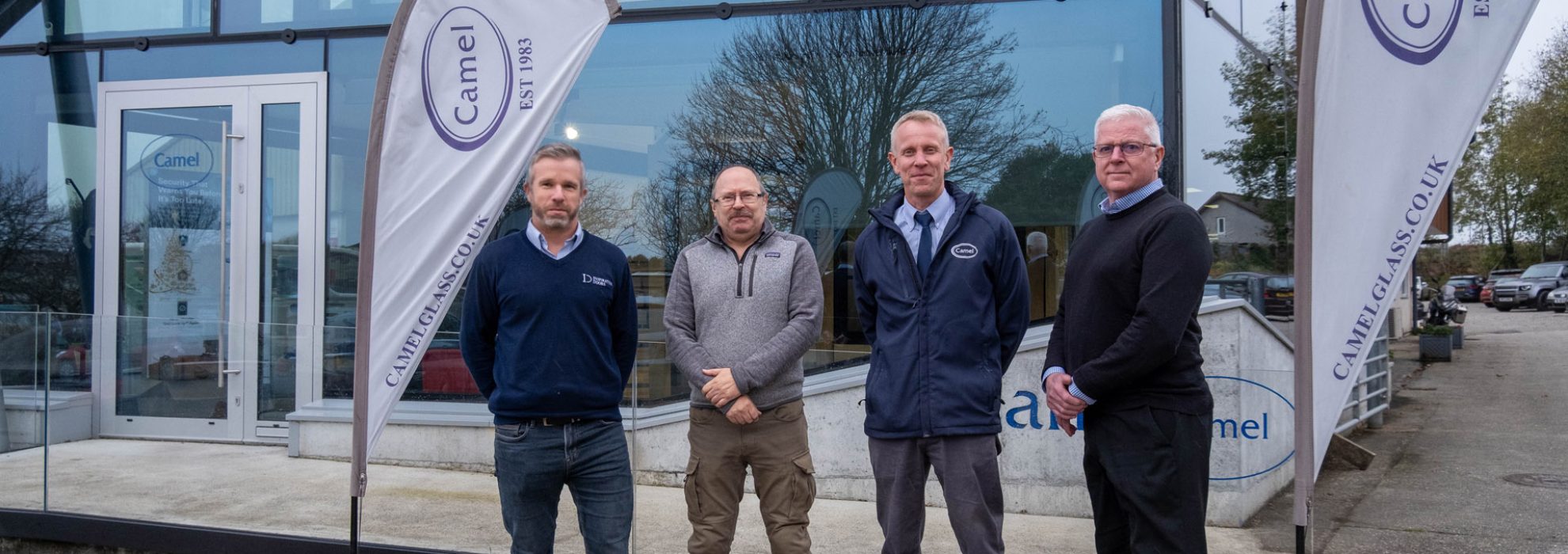
Wadebridge firm cuts carbon in door manufacturing thanks to D4M support
Support:
- Digital adoption roadmap
- Process mapping
- Waste identification
- Digital solutions identified and deployed
Impact:
- 115% increase in productivity
- £12,000 energy savings p.a.
- 8 Tonnes of Co2e reduction
- Reduction in process variables
- Reduced Leadtime
- Improved quality (door finish)
Summary
Camel Glass & Joinery Ltd engaged with local expert manufacturing advisers to examine and improve the production of their specialist Inspiration Doors line. By applying innovative thinking, specialist manufacturing expertise and data-driven insights, the project delivered by Oxford Innovation Advice’s D4M programme, successfully reduced carbon usage, increased productivity and enhanced process reliability. This partnership demonstrates how tailored SME support can accelerate growth for ambitious manufacturers in Cornwall and the wider South West.
Company Background
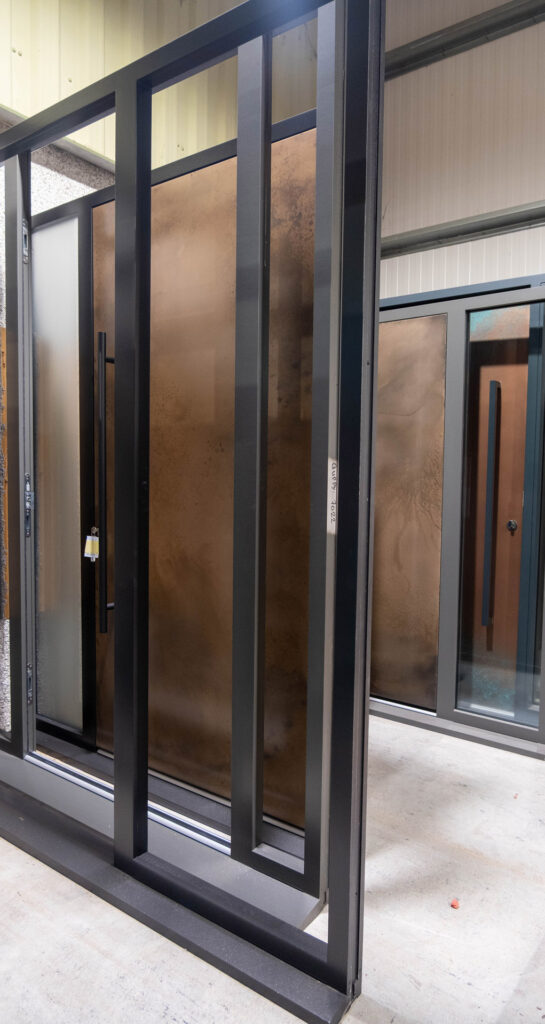
Founded in 1989, Camel Glass & Joinery Ltd is a family-run glazing and joinery business with over 35 years’ experience serving Cornwall and North Devon. Over the decades, the company has grown through their commitment to craftsmanship and innovation. This approach has led to the creation of their Inspiration Doors range- distinctive, handcrafted entrance doors with unique finishes.
The company expanded into bespoke joinery in the early 2000s and opened a second site in 2010. In 2015 they launched the Inspiration Doors line, introducing new finishes and materials that earned industry recognition for design excellence in 2022.
The Challenge
As demand for the premium Inspiration Doors range grew, Camel Glass were aware that their production bottleneck was in the finishing process. The achievement of the patina of the door finish is sensitive to both process and environmental variables, which can extend lead times and incur additional costs related to the generation of heat required for the process.
These challenges limited throughput, increased rework and affected the ability to forecast lead times reliably—common issues faced by ambitious SME manufacturers navigating scale and innovation simultaneously.
Energy usage was also significant, particularly in colder months, incurring an environmental cost that the business was keen to reduce. The company sought a more predictable, efficient and sustainable way to maintain door quality whilst increasing capacity.
The Solution
The Oxford Innovation Advice D4M team brought specialist SME expertise and an unrivalled understanding of local manufacturing challenges, guiding Camel Glass through a structured improvement programme of support:
- The manufacturing workflow was mapped in detail, identifying process variables affecting quality and lead time.
- Data insights were used to pinpoint and quantify environmental factors driving inconsistency.
- Innovative new heat-source technology was introduced and trialled, designed to be more energy efficient and suitable for automated, out-of-hours operation.
- A controlled curing environment and automation system was supported by the D4M technical specialist to safely continue production overnight and at weekends.
- A prioritised action plan enabled the team to implement improvements at pace and with minimum disruption.
This solution leveraged both the regional strengths of Cornwall’s advanced manufacturing ecosystem and the D4M team’s ability to facilitate innovative solutions powered by people, technology and data.
The approach also ensured responsible practices were embedded—reducing carbon use, improving energy efficiency and supporting sustainable growth.
The Benefits
The improvements transformed process reliability and output:
- Greater productivity and capacity further enhanced through automation
- Reduced carbon footprint and lower energy costs thanks to the switch to a more efficient heat source.
- Consistent high-quality finishes with reduced rework and fewer process deviations.
- Improved forecasting accuracy that enabled better customer experience and operational planning.
- Enhanced team engagement that resulted in staff taking ownership of an improved, leaner workflow.
These gains illustrate how specialist business expertise accelerates the growth of ambitious SMEs, allowing Camel Glass to maintain its bespoke artisan quality whilst scaling responsibly and improving production efficiency.
The Future
Camel Glass and Joinery continue to build on the momentum created through the project. They are now:
- Applying data-driven decision making to wider infrastructure improvements, including alternative energy feasibility studies.
- Using the ROI demonstrated from the heat-source transition to inform broader sustainability planning.
- Embedding continuous improvement practices to support future product innovations.
- Developing new and innovative door finishes to further increase sales.
Their journey demonstrates the impact of expert SME support aligned with regional ambitions, helping Cornwall’s manufacturing sector progress towards a greener, more competitive future.